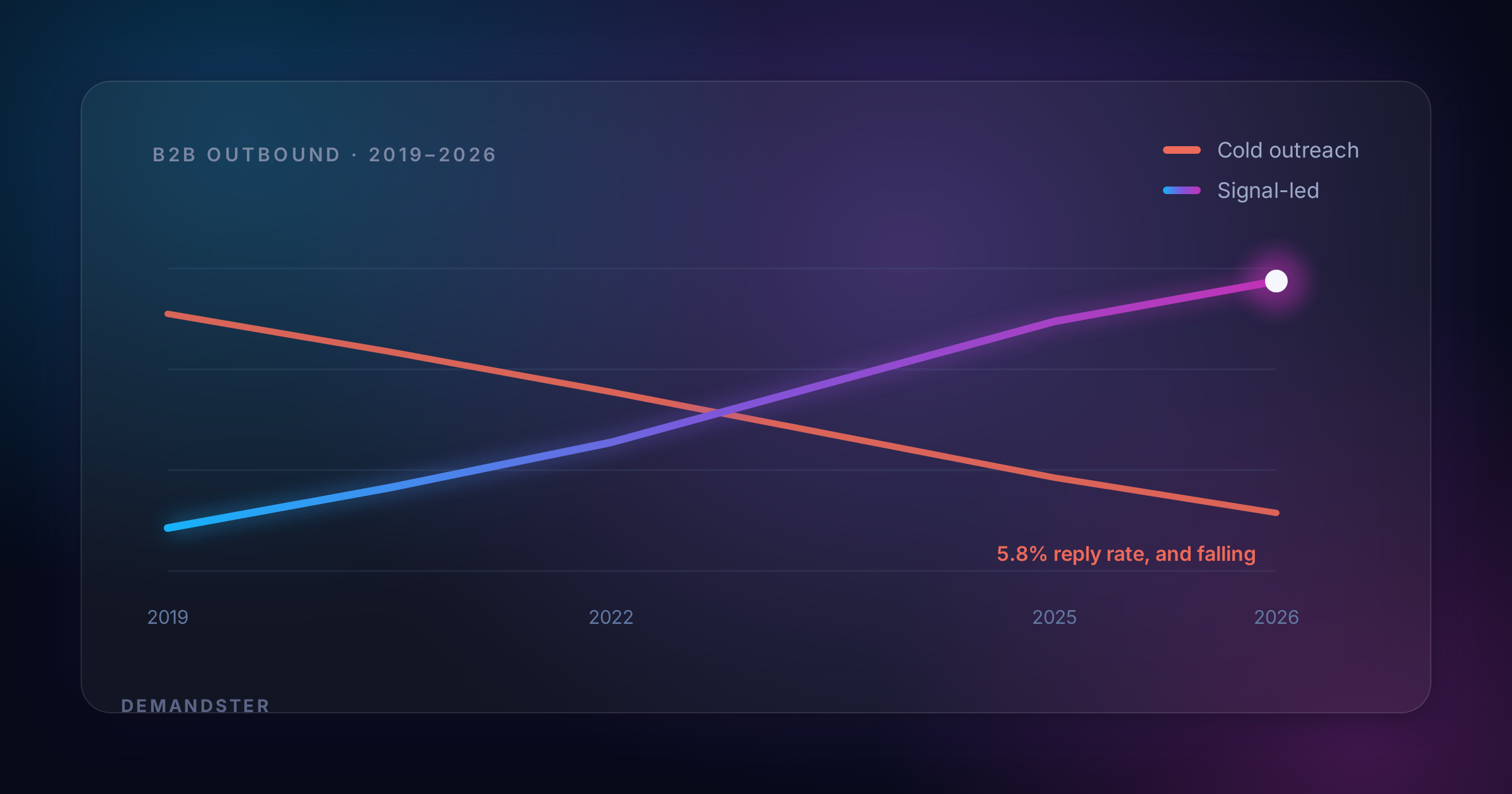
Outbound still books meetings in 2026. But the kind that books them has changed dramatically, especially in the last two years. A cold, no-relationship message sent at volume now arrives as one of twenty in a crowded inbox, and reply rates have fallen with it. What works follows a signal: a prospect downloads a guide, engages with a point of view, or shows real intent, and the outreach meets them there. Cold sequencing into strangers is the declining motion. Signal-led outreach, fed by content, is the one that compounds. Which motion you build on decides where next year's pipeline comes from.
So here is the straight answer. Cold interruption outreach is in decline, and the version that survives is permissioned and signal-led. From here, the pattern, the evidence behind it, and what to run instead.
One camp says cold outreach is finished. Email filters are brutal and buyers have gone numb to LinkedIn requests. Another camp says it works fine, you just need better copy, a clear and good offer, and more volume. Both have a point, and both miss what actually decides the outcome.
The deciding factor sits one level deeper than the channel or the copy. It comes down to one thing: a real signal sitting in front of the outreach. A message to someone who has already raised their hand is a different motion than a message to someone who has never heard of you, even when the words are identical. Treating those two as the same activity is why teams debate if outbound still works while their reply rates quietly drift toward zero.
The decline follows a familiar curve. Cold email saturated around 2019. Cold calling saturated around 2015. A channel works until volume and filters kill the cold version, while the warm, permissioned version keeps going. Cold LinkedIn outreach is now walking the same path.
The public data points the same direction. In a 2025 study of 16.5 million B2B cold emails, Belkins found average reply rates fell from 6.8% in 2023 to 5.8% in 2024, and that emailing one or two contacts per company replies at 7.8% while blasting ten or more drops it to 3.8%. On LinkedIn, Expandi's 2025 analysis of more than 20 million outreach attempts puts the average connection-acceptance rate near 29%, with personalized requests roughly tripling the acceptance of generic ones. Volume and low-relevance sending are exactly what is decaying.
Three patterns from recent client work make it concrete.
A B2B SaaS company ran nine outbound sequences over roughly ten weeks and didn't book meetings from them. The one reply that looked like a lead turned out to be a job seeker. The copy was solid. The gap sat upstream. Those sequences needed a first-party signal to follow, and the content engine and lead magnet that create it were missing. Cold sequencing was doing a job it was never built to do alone.
A B2B enterprise SaaS in retail ran an account-based LinkedIn campaign to 280 hand-picked accounts and got zero downloads. The same budget moved to an intent-reading paid channel and produced leads. The cold, interruption channel underperformed against a channel that reads buying intent and meets it.
A B2B consulting client took the opposite approach and led with a content offer. The signal-led program is reaching senior technical buyers, CTOs specifically, at roughly €29 per qualified download. The outreach there is following engagement, not manufacturing it from a cold list.
Here is the honest counter-evidence, because the picture is a slope and not a cliff. On that same B2B SaaS account, a narrower cold play aimed at a champion cohort, the RevOps and enablement people rather than the CRO, lifted accept and reply rates by roughly four times versus cold to senior buyers. Cold still books the occasional meeting, but the cost per booked meeting keeps climbing, and the slide is gradual and depends on who you target. Read those champion-cohort numbers as what good looks like on a fading channel, not as a reason to keep pouring budget into it.
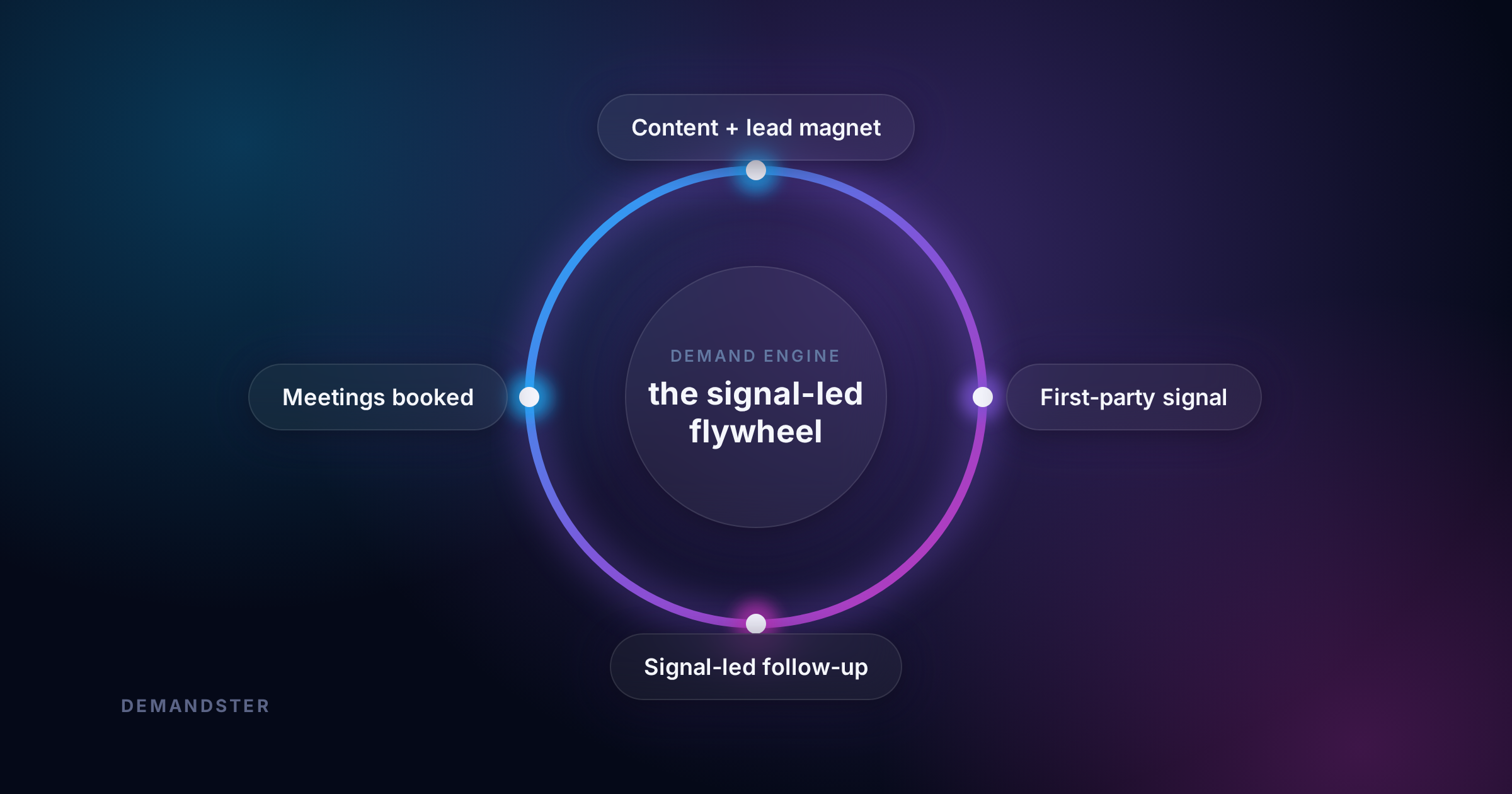
The alternative has a shape worth naming. Call it the signal-led flywheel. Content and lead magnets create first-party engagement at the top. That engagement is the signal. Follow-up tools capture the signal and work it at the bottom. The two halves are one system, and cold sequencing fails because it tries to skip the top and start at the bottom.
This is what demand capture actually looks like in practice. The content and lead magnets are the demand generation; the signal-led follow-up is the demand capture. The usual gap is a team that nails one half and neglects the other, which is why the handoff breaks.
The difference between the two motions is the whole game.
The engine that creates the signal
This connects to an idea Demandster keeps returning to: inbound and outbound belong together. Content creates the signal. Outbound captures the timing. Run them in separate silos and you get a fragmented buyer experience and a sequence that talks to people who were never warmed up.
This shift is bigger than one agency's view. Gartner's 2026 survey of 646 B2B buyers found 67% now prefer a rep-free buying experience, and 45% used AI during a recent purchase (Gartner). As Alyssa Cruz, Senior Principal Analyst in the Gartner Sales Practice, put it:
"B2B buyers are progressing through critical buying tasks in more autonomous ways, and sellers can't rely on static collateral to carry influence in those moments." Buyers research first and on their own terms. Content is how you get found in that research, and the signal it throws off is what your follow-up follows.
Two moves change the outcome. Get them right and the rest follows.
First, build the engine that creates first-party signal before you scale any sequence. A point of view published consistently, plus one or two lead magnets dense enough that a buyer trades their email for them. This is the part most teams skip because it is slower to stand up, and it is the part that makes everything downstream work. When a buyer already recognizes your thinking, the follow-up becomes a scheduling conversation instead of a cold pitch.
Second, point your follow-up at the signal, not at a cold list. When someone downloads the guide, engages with the content, or hits a real intent trigger, that is when a sequence earns its place. Same tools, different trigger. The follow-up window matters: meeting a fresh signal within a day or two is where the conversion lives.
Keep cold connection requests for one job only, growing an audience that feeds future content distribution. Treating them as a direct path to a booked meeting is the move that produced zero meetings in ten weeks.
The enemy here is cold outreach with nothing in front of it. Build the signal first, then let the outreach follow it.
Cold email still produces some meetings, but the trend is down and the economics are getting harder, the same path cold calling walked years earlier. It works best as follow-up on a real signal, a download or an intent trigger, rather than as volume into a cold list. As a standalone motion at scale, the reply and meeting rates rarely justify the effort.
Signal-based outbound is follow-up triggered by something the prospect actually did: downloading a lead magnet, engaging with your content, a hiring or funding event, or another real intent marker. Instead of messaging strangers at volume, you message people who have already shown a reason to talk. The message references the signal, which is why it converts at a higher rate than cold.
You create first-party signal and follow it. Publish a clear point of view, offer one or two genuinely useful lead magnets, and run paid or organic distribution to put them in front of the right accounts. When buyers engage, follow up fast. The content does the warming, and the outreach captures the timing.
No. Change the trigger rather than switching outbound off. Cold interruption at volume is the declining part. Signal-triggered follow-up on people who already engaged is alive and is where the advantage sits, so keep that and feed it with content. Outbound and content work as one system. Treat them that way.